
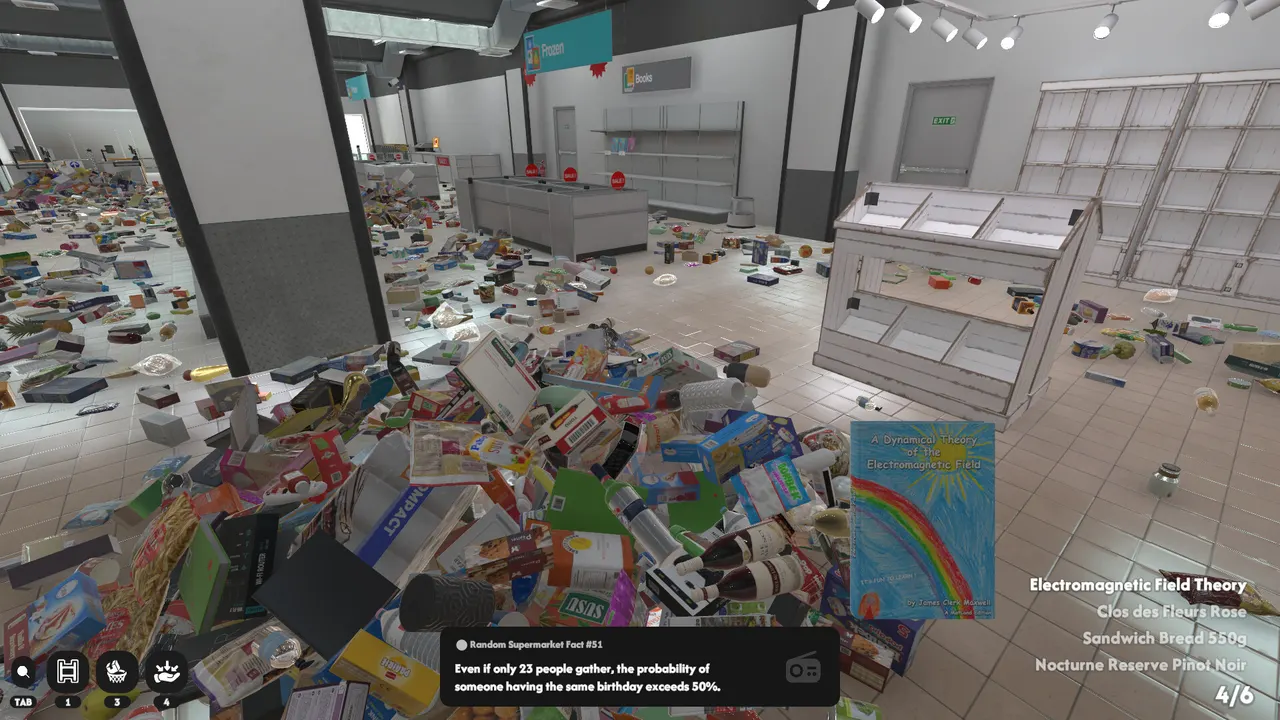
Supermarket Chaos does not need complicated jargon, but a few terms make the route easier to explain. This glossary uses player-facing words tied to real sorting decisions. The goal is to make guide instructions precise without sounding like a spreadsheet. When a term appears in another guide, it should help you decide where to carry an item, when to make a temporary pile, or when to stop guessing and read the label.
Route terms
Section-first route means solving the broad category before exact shelf placement. Temporary pile means a small group of items placed near a likely section while you gather more label information. Exact label match means using the shelf label name and price as the final placement check. Local sweep means finishing nearby obvious matches before leaving the aisle. Backtracking means returning to a previous shelf family with better information, not randomly revisiting the whole map.
Progress terms
Stocked milestone means an achievement threshold tied to correctly placed products, such as 100, 777, 1,000, or 4,668 products. Final cleanup means the late stage when most shelves are readable and the remaining products require careful searching or finder-style help. Route compression means reducing repeated travel after you understand the store. Bottleneck means the current source of delay: walking distance, carry capacity, label confusion, or missing leftovers.
Section terms
Confirmed section means a category named by official Steam copy or visible in Steam media. Product family means a practical group such as cleaning goods, bakery sweets, books, wine, or ramen. Shelf family means a smaller cluster inside a section where labels share similar product types. Visual anchor means a sign, shelf shape, package silhouette, or repeated label style that helps you narrow the search area. It is useful, but the final shelf still needs a label match.
Diagnostic terms
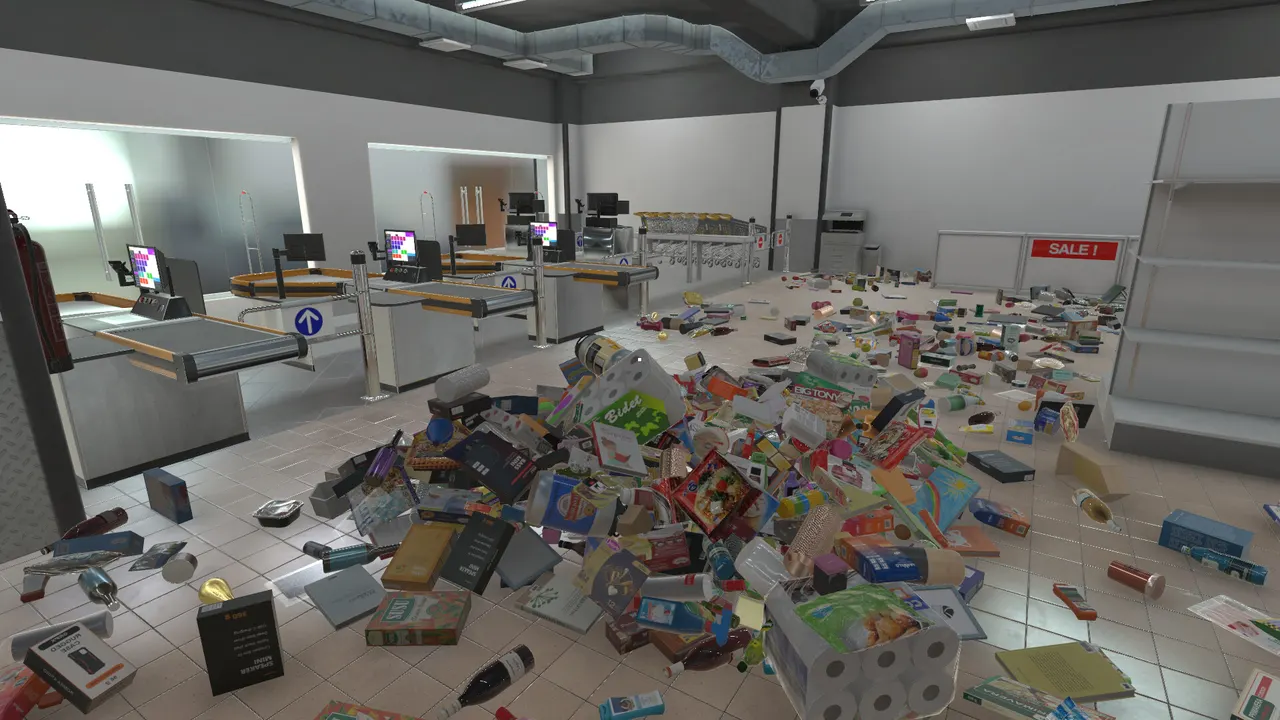
Misroute means a product was carried to the wrong broad family before label matching even began. Label conflict means two shelves or products look similar enough that the exact text and price need comparison. Visual noise means too many unsorted products are blocking clear decisions. Stalled progress means your stocked count or visible cleanup no longer improves, usually because leftovers are scattered. Recovery pass means a deliberate walk through edges, corners, and review piles after the main route is mostly complete.
Terms in practice
The terms connect into one workflow. A section-first route starts with a visual anchor, creates a temporary pile, checks product family, then finishes with exact label match. If progress stalls, identify the bottleneck: walking distance, carry capacity, label confusion, or missing leftovers. During final cleanup, use recovery passes to inspect corners, shelf ends, and old piles. These words are not decorative jargon. They let each guide explain the same process without redefining it from scratch.
Terms to avoid
Avoid vague terms such as “random item,” “probably here,” or “just search around” when planning a route. They do not tell you what to do next. Replace them with concrete questions: Which section family is this? Which shelf label is the closest match? Is this pile still useful? Is the bottleneck movement, carrying, search, or readability? Better terms create better actions. A clearer vocabulary makes the store feel smaller because each product has a testable next step.
FAQ
What is a section-first route?
It is a playstyle that prioritizes identifying the correct broad section before exact shelf matching. It reduces wrong guesses across a large store because every item is first tested against a product family, then checked against a specific shelf label. This is the base method used by most guide pages here.
What is final cleanup?
It is the late stage after most shelves are filled, when remaining products are scattered, visually similar, or tied to confusing shelf labels. This is the best time to use search tools, because the remaining problem is precision rather than broad route learning. Before using help, consolidate leftovers into local review piles.